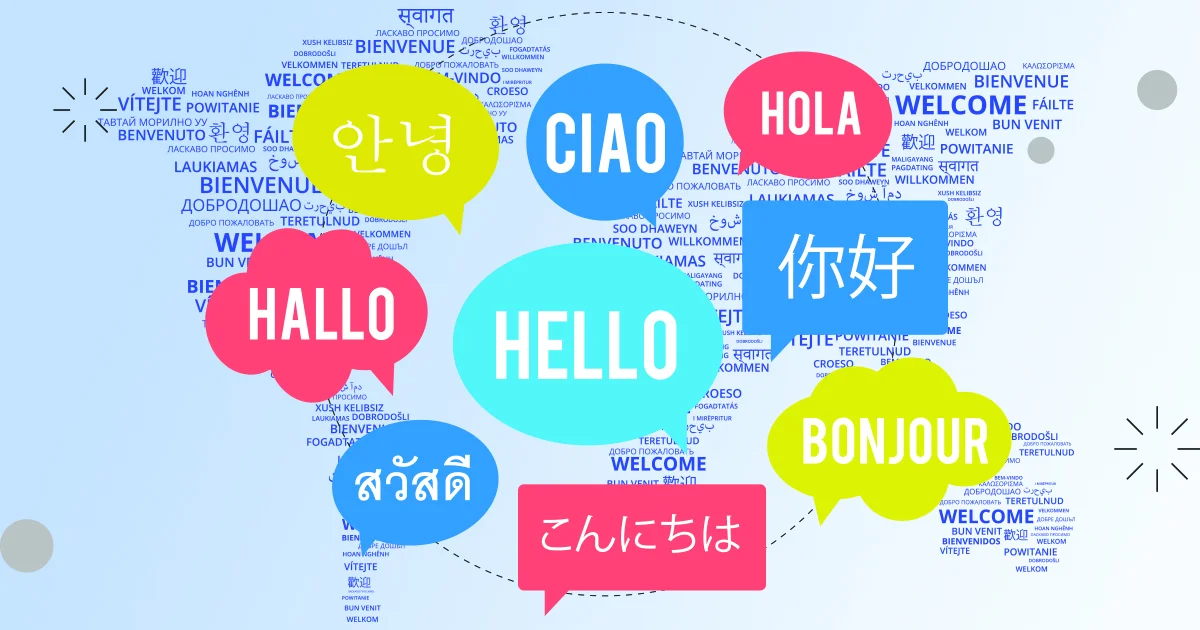
Many companies think that a "multilingual" site is just a little flag at the top right and an automatic translation plugin. Result: an approximate English site, poorly referenced, and foreign customers who leave after 10 seconds. A true multilingual site is a project in its own right — and it's also one of the most profitable investments for a company looking beyond its local market.
Why most “automatic” translations miss their target
A translation plugin (integrated Google Translate, or equivalent) translates text, not commercial intent. It produces content:
- Grammatically correct but culturally wrong — the expressions that convert in French do not work as they are in English or Spanish
- Invisible to Google — content generated on the fly on the client side is often neither indexed nor understood as a real page in the correct language
- Without clean URLs — when the URL remains the same regardless of the language, search engines don't know which version to show to which visitor
The most common symptom: a site “translated into 6 languages” which generates absolutely no organic traffic outside of French. The content exists, but it is never found.
What a well-designed multilingual site should have
Dedicated URLs per language
Each language must have its own URL: /fr/, /en/, /es/ or separate domains depending on the policy. This is the basis for Google to index each version as a page in its own right, with its own possible positioning.
hreflang tags
The hreflang tag tells Google: "this page also exists in English, here" and "in Spanish, there". Without it, search engines may show the wrong version to a visitor, or worse, view different languages as duplicate content and index only one.
A real translation, not a literal translation
A good slogan in French can sound hollow or clumsy when translated word for word. The translation of a professional site must be adapted — even rewritten — for each market, with its own cultural references, its units (currencies, dates, telephone formats) and its own tone.
A structured translation system, not hardcoded text
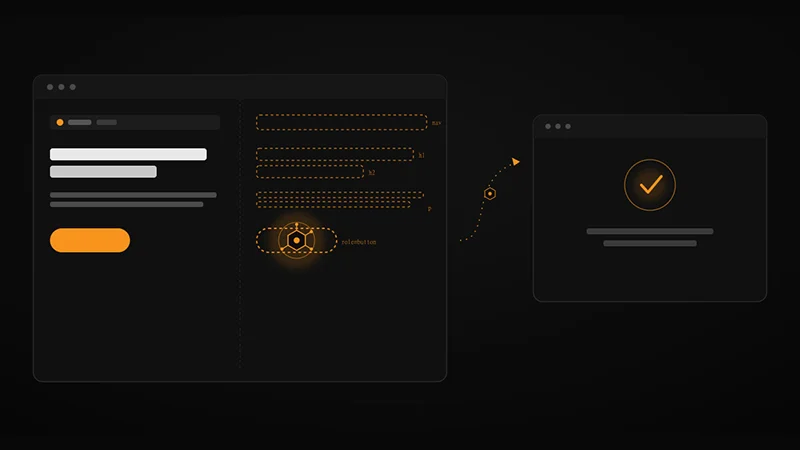
Technically, each displayed text must come from a centralized translation system (language files, translation database) rather than being written directly in the code of each page. This avoids inconsistencies, makes it easy to spot what hasn't yet been translated, and makes adding a new language much faster.
An intelligent fallback mechanism
If a page or channel does not yet have a Spanish translation, the site should display the English or French version by default rather than empty text or an error. A visitor should never see a gap in the content.
The concrete benefits of a well-designed multilingual site
- International SEO: each language can position itself independently on local search engines (Google.co.uk, Google.es, etc.)
- Higher conversion rate: a visitor who reads a site in their native language, with a natural tone, has much more trust than a visitor who has to "guess" the meaning of an automatic translation
- Professional image: a neat multilingual site signals a serious company, capable of addressing an international market
- Real market opening: a European or English-speaking customer who finds your site in their language is a qualified prospect that you would never have reached otherwise
Mistakes to avoid
- Translate only part of the site: a visitor who starts in English and suddenly switches back to French halfway through instantly loses confidence
- Forget metadata: title tags, meta description and structured data must also be translated — these are what Google displays in search results
- Ignore local formats: dates, currencies, decimal separators (1,000.00 in English vs 1,000.00 in French) must automatically adapt to the language
- Translate only for form: without a content strategy (blog, SEO pages) in each language, multilingual remains a veneer without substance behind
Where to start?
Before translating the entire site, prioritize the pages with the greatest commercial impact: home, services, contact, and the pages that already generate organic traffic in French. A professional translation (human, or at least proofread by a native speaker) of these key pages is much better than an automatic translation of the entire site.
A multilingual site is not an incidental marketing cost — it is an acquisition channel in its own right, which continues to work for you once set up correctly.